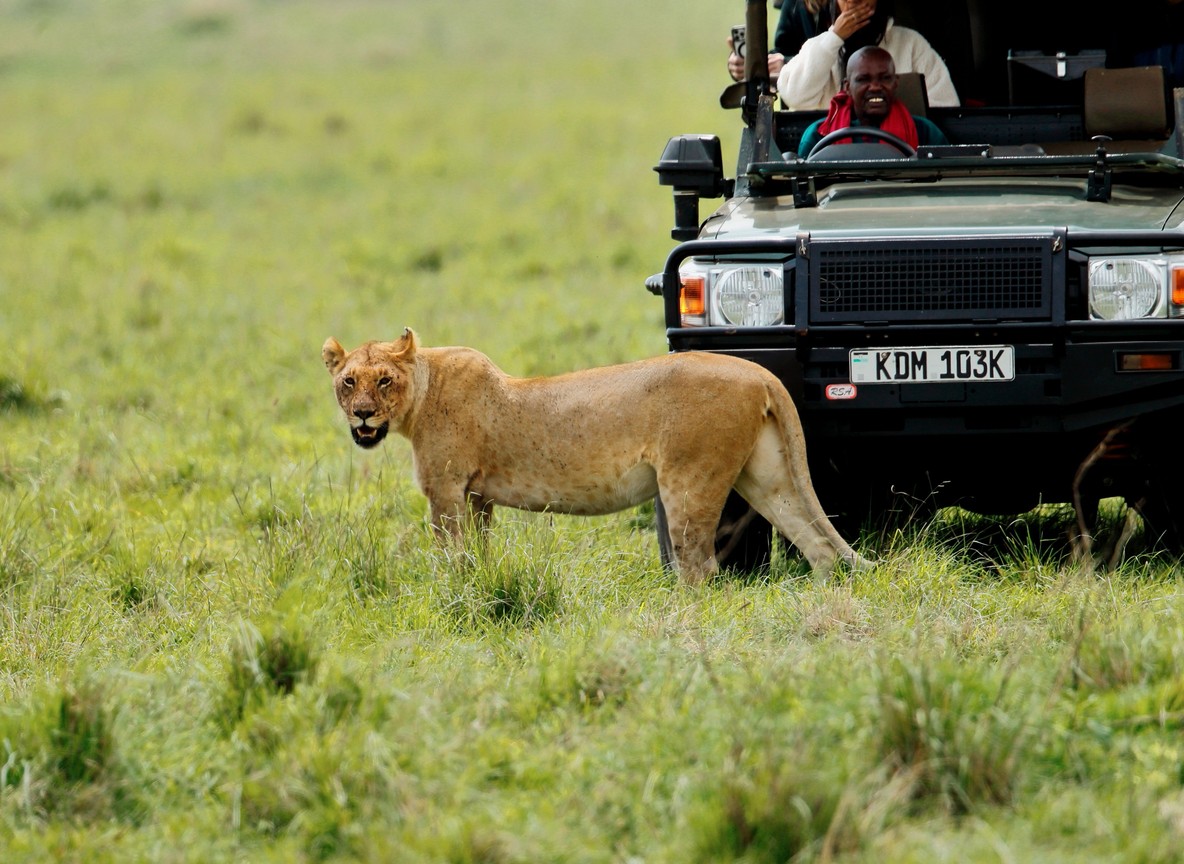
Most travelers visiting Kenya need to apply for a visa before they arrive, and the process is managed entirely online through a government portal. Getting to grips with Kenya visa requirements early means fewer surprises at the border and a smoother start to your trip. This guide covers everything you need to complete your application, from eligibility and required documents to processing timelines, fees, and what to do if something goes wrong.
Do You Need a Kenya Visa?
Your nationality determines whether you need to apply in advance or simply present your passport at the port of entry.
Travelers who do not need a visa include citizens of most African Union member states and a small number of countries with bilateral agreements. These travelers receive a visitor’s pass on arrival, valid for up to 90 days, at no charge. Supporting documents including proof of accommodation and a return ticket are still expected at immigration.
Travelers who do need a visa include nationals of the United States, United Kingdom, Canada, Australia, and most European and Asian countries. If your country is not on the exempt list, you must apply online before travel.
The official Kenya eCitizen portal at ecitizen.go.ke maintains the current list of visa-exempt nationalities. Policies are updated from time to time, so verify your status there before committing to a travel date.
Choosing the Right Visa Type
Kenya offers several visa categories. The tourist e-visa covers the vast majority of leisure and safari travelers, but it is worth knowing what else exists.
Tourist e-visa. Valid for 90 days from the date of issue. Single entry. Stay of up to 90 days. Fee: $50 USD. Processing: 3 to 5 business days. Apply online at ecitizen.go.ke.
Business e-visa. Covers business meetings and conferences. Same validity, fee, and processing window as the tourist e-visa.
Transit visa. For travelers passing through Kenya to another destination. Permits a stay of up to 72 hours. Fee: $20 USD. Processing: 3 to 5 business days.
Multiple-entry visa. Valid for one year, with stays of up to 90 days per entry. Fee: $100 USD. Processing: 5 to 7 business days. Suited to travelers making more than one visit within a year.
Visitor’s pass (visa-exempt nationals only). Issued on arrival to qualifying nationalities. No advance application. No fee. Valid for up to 90 days.
For most safari and leisure travelers, the standard tourist e-visa is the right category.
Kenya Visa Requirements: Step-by-Step Application
The entire application is completed online through the eCitizen portal. No embassy visit or physical document submission is required.
Step 1. Go to ecitizen.go.ke. Select “Apply for E-Visa” and choose your visa type. You will need to create an account using your email address before the form opens.
Step 2. Complete the application form. Fill in your personal details (full name, date of birth, nationality), passport information (number, issue date, expiry date), planned travel dates, purpose of visit, and your accommodation address in Kenya.
Step 3. Upload your documents. Each file must be clear and fully legible. The portal accepts JPG format for photographs and PDF or JPG for supporting documents. Prepare everything before you start the form so you are not searching for files mid-application.
Step 4. Pay the application fee. Payment is by credit or debit card. Visa, Mastercard, and American Express are accepted. The charge is processed immediately on submission.
Step 5. Submit and wait for a decision. After submitting, you receive a reference number by email. Standard processing takes 3 to 5 business days.
Step 6. Download and print your e-visa. Once approved, save the PDF and print at least two copies on white paper. Present the printed document alongside your passport at Kenya immigration. Keep a digital backup as well, but note that immigration officers generally expect a physical copy.
Required Documents
Gathering everything before you open the form reduces errors and avoids incomplete submissions.
Passport. Must be valid for at least 6 months beyond your intended departure from Kenya, with at least 2 blank pages remaining. Upload a clear color scan of the biographical data page.
Passport-size photograph. Color image, white background, taken within the last 6 months. Dimensions: 4 x 6 cm (approximately 1.5 x 2.4 inches). No glasses, no head coverings. Digital file in JPG format. Ensure the face is fully visible with even lighting and no shadows.
Return flight confirmation. Shows your name, travel dates, and flight numbers. An email confirmation is acceptable.
Accommodation proof. A hotel, lodge, or Airbnb booking confirmation showing your name, the property address, and stay dates.
Bank statement (last 3 months). Demonstrates you have adequate funds for your visit. A balance of $1,000 or more is commonly cited as a reasonable threshold, though no official minimum figure is published by Kenya Immigration.
Employment letter (optional). From your employer, confirming your role and approved leave dates. Helpful but not mandatory.
Travel insurance (strongly recommended). Not a formal visa requirement, but comprehensive coverage that includes medical evacuation is worth having. Kenya’s national parks and wildlife conservancies are remote, and emergency medical transport is costly without insurance. Suggested minimum coverage: $100,000 medical, $250,000 evacuation, full trip cancellation.
Processing Times and Fees
Standard processing takes 3 to 5 business days for applications submitted on weekdays. Submissions made on weekends or public holidays sit in queue until the next working day, so factor that into your timeline.
An expedited processing option is sometimes available through the portal, at an additional cost. Availability is not guaranteed; check the eCitizen site at the time of your application.
Recommended lead time: Apply at least one week before departure, and ideally two weeks. Submitting early in the week (Monday through Wednesday) gives you the best chance of a decision before the following weekend.
| Visa type | Fee | Processing |
|---|---|---|
| Tourist e-visa | $50 USD | 3 to 5 business days |
| Business e-visa | $50 USD | 3 to 5 business days |
| Transit visa | $20 USD | 3 to 5 business days |
| Multiple-entry visa | $100 USD | 5 to 7 business days |
| Visitor’s pass | Free | On arrival |
All fees are paid in USD by card at the time of submission. Confirm current amounts on the official portal, as they are subject to change.
Common Application Mistakes
Most delays and rejections trace back to a short list of avoidable errors.
Poor scan quality. Blurry or low-resolution uploads are the most common reason applications stall. Photograph documents flat on a surface in good light, or use a scanner. Check each file before uploading.
Non-compliant photograph. The passport photo must be taken against a plain white background. Photos with colored walls, visible shadows, eyeglasses, or headwear are rejected automatically.
Name discrepancies. Your name on the form must match your passport exactly, including the order of given names and family name. Even a single character difference can trigger a rejection. Passport renewal after approval. Your eTA is tied to the exact passport number you applied with. If you renew your passport before travel, the approval no longer matches, and immigration can refuse entry on that basis. Either travel with both the old and new passports so the numbers can be reconciled, or submit a fresh application against the new passport well ahead of departure.
Applying too late. Processing is not instant, and weekend submissions do not begin moving until Monday. Applying the day before travel is not a workable strategy.
Payment card issues. Some banks block international online transactions by default. Contact your bank in advance to make sure the payment will go through, or have a backup card ready.
If Your Visa is Denied
Denial is not common, but it does happen. The notification email typically states a reason. Common causes include incomplete information, low-quality document scans, a passport with less than 6 months validity remaining, or insufficient financial evidence.
To reapply, correct the issue that caused the denial, prepare improved documentation, and submit a fresh application. The application fee is charged again. There is no formal appeal process for standard e-visa decisions; reapplication is the standard course of action.
For complex situations such as prior visa violations, a criminal record, or circumstances not covered in the standard application, contact the Kenya Department of Immigration directly or speak with the Kenyan embassy in your home country before reapplying.
Special Circumstances
Certain traveler situations require documentation beyond the standard list.
Children. Minors need their own passport and e-visa. When a child travels with only one parent or with a non-parent guardian, immigration officers may request a parental consent letter and the child’s birth certificate. Carry both as a precaution.
Dual nationals. Use the passport from the nationality that requires a visa. Attempting to enter on a visa-exempt passport when your other nationality would require a visa can create complications.
Name changes. If your current legal name differs from what appears on an older travel document due to marriage or a legal name change, carry the supporting certificate alongside your passport.
Travelers without formal employment. Bank statements are the primary evidence of financial capacity. A sponsor letter from a family member or partner covering your travel costs may also be submitted.
Students, retirees, and self-employed travelers. Provide whatever financial documentation applies to your situation: enrollment letter and bank statements for students; pension statements for retirees; business registration documents and tax records for the self-employed.
Explorer Notes
Yellow fever vaccination. Travelers arriving from countries classified as yellow fever endemic are required to show a valid International Certificate of Vaccination (the yellow card) at entry. Even if you are not coming from an endemic country, carrying the certificate is sensible if your wider itinerary passes through affected regions.
Health requirements beyond yellow fever. Entry health documentation requirements (including any vaccination or testing rules) change periodically. Check the Kenya Ministry of Health guidance and your government’s travel advisory in the weeks before departure, not months in advance.
Extending your stay. If you wish to remain in Kenya beyond the period stamped in your passport, apply for an extension through the Department of Immigration Services in Nairobi before your current authorization expires. Overstaying is treated seriously and can affect future visa applications to Kenya and other countries.
Carry a printed e-visa. Kenya immigration generally expects a physical copy of the approved e-visa, not just a phone screen. Print two copies before leaving home. Keep one in your hand luggage and one in your checked bag.
Budget reference point. The visa fee is a relatively small part of the overall trip cost. A typical two-week Kenya itinerary might involve $500 to $1,500 in international flights, $30 to $50 in travel insurance, and safari accommodation costs that vary widely by camp style and season. Plan the visa well, but do not let it crowd out attention to the bigger budget items.
Getting Your Kenya Trip Off the Ground
Kenya visa requirements are straightforward for most travelers. The online process is well-designed, the fees are modest, and the documentation list is standard for international travel. The main discipline required is time management: start two weeks before your departure date, have all your documents scanned and ready before you open the application form, and print your approved e-visa before you leave home.
For current fee amounts, nationality eligibility, and any policy changes, the Kenya eCitizen portal at ecitizen.go.ke is the authoritative source. When information on third-party sites conflicts with what appears there, the portal takes precedence.
If this guide has you ready to travel, a safari specialist can handle the route, camps, and logistics end to end.
Want to Book a Tour With Us?Further reading
More safari planning resources
- 3-day Masai Mara safari package from Valley Safaris
- Compare Kenya safari packages on FindMySafari
- Family safari collection on FindMySafari
- Kenya tour packages from Valley Safaris